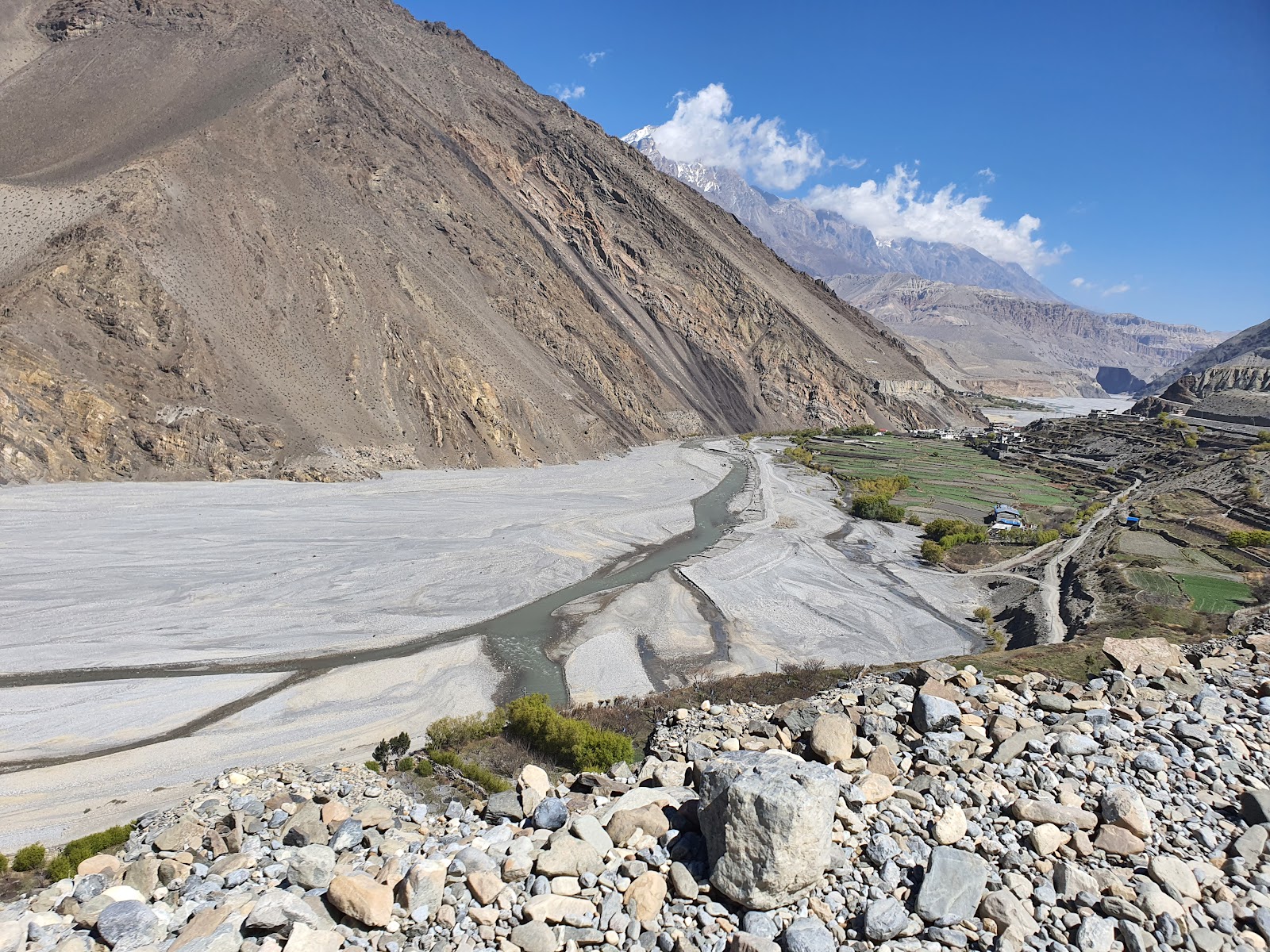
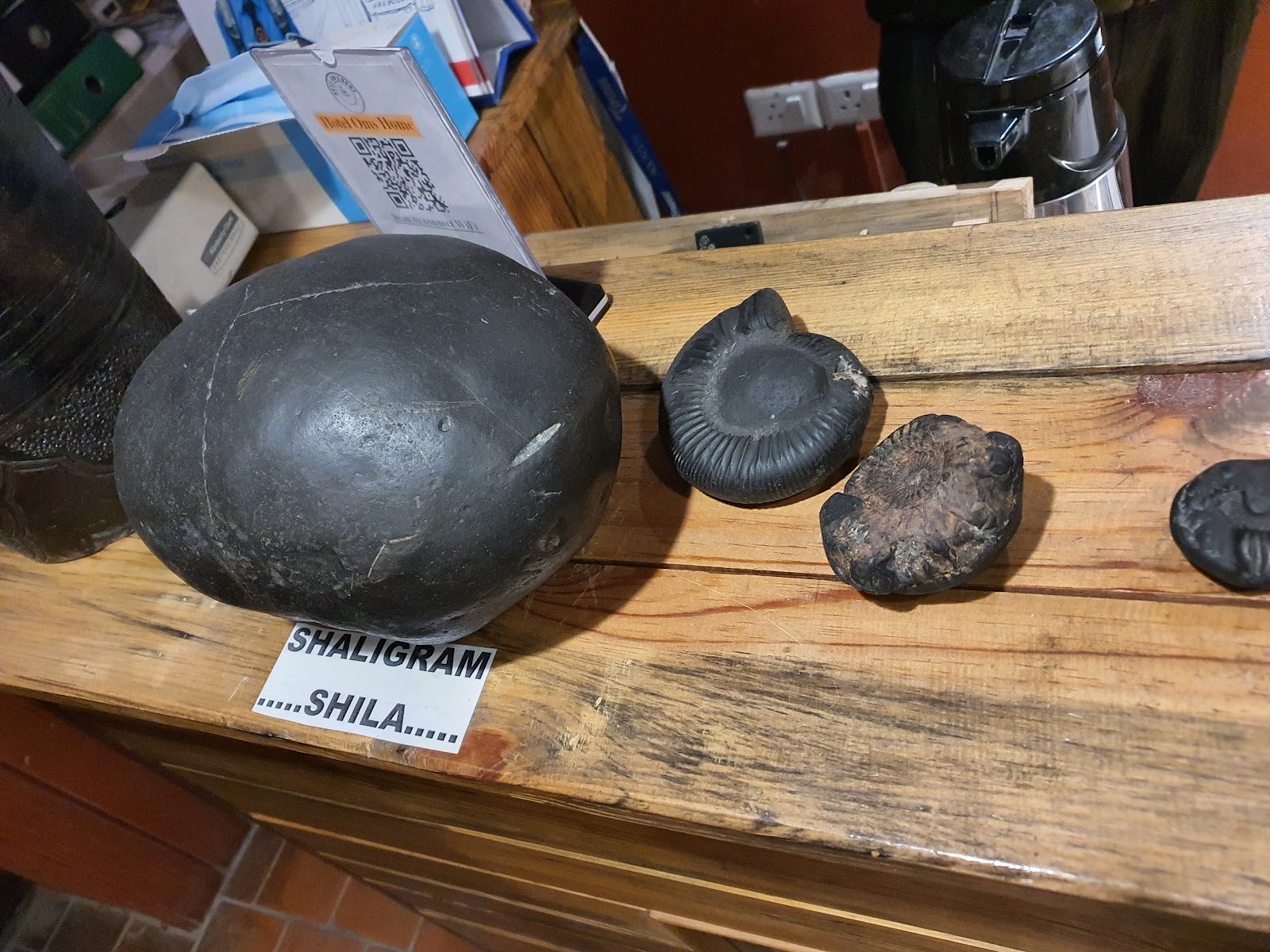
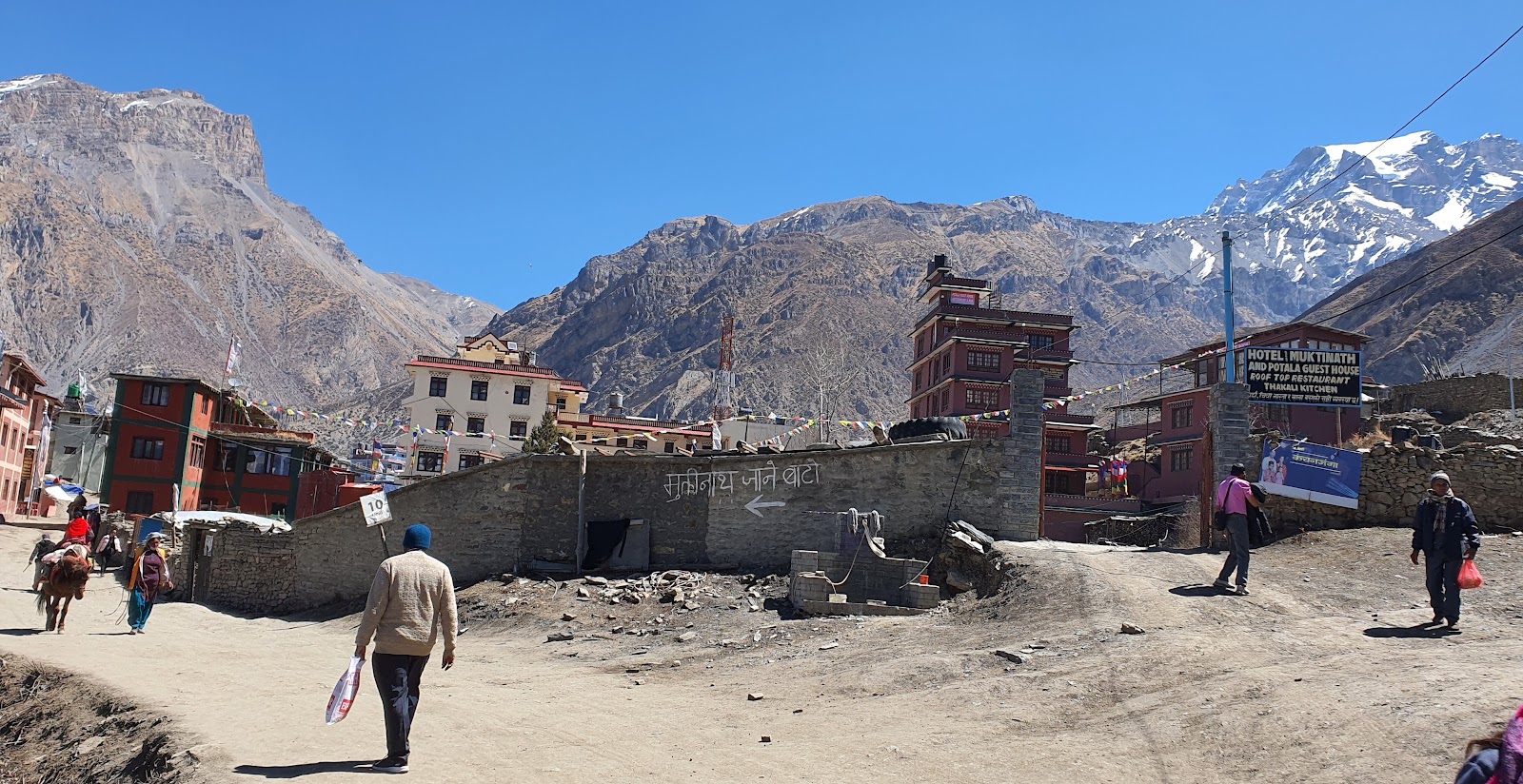
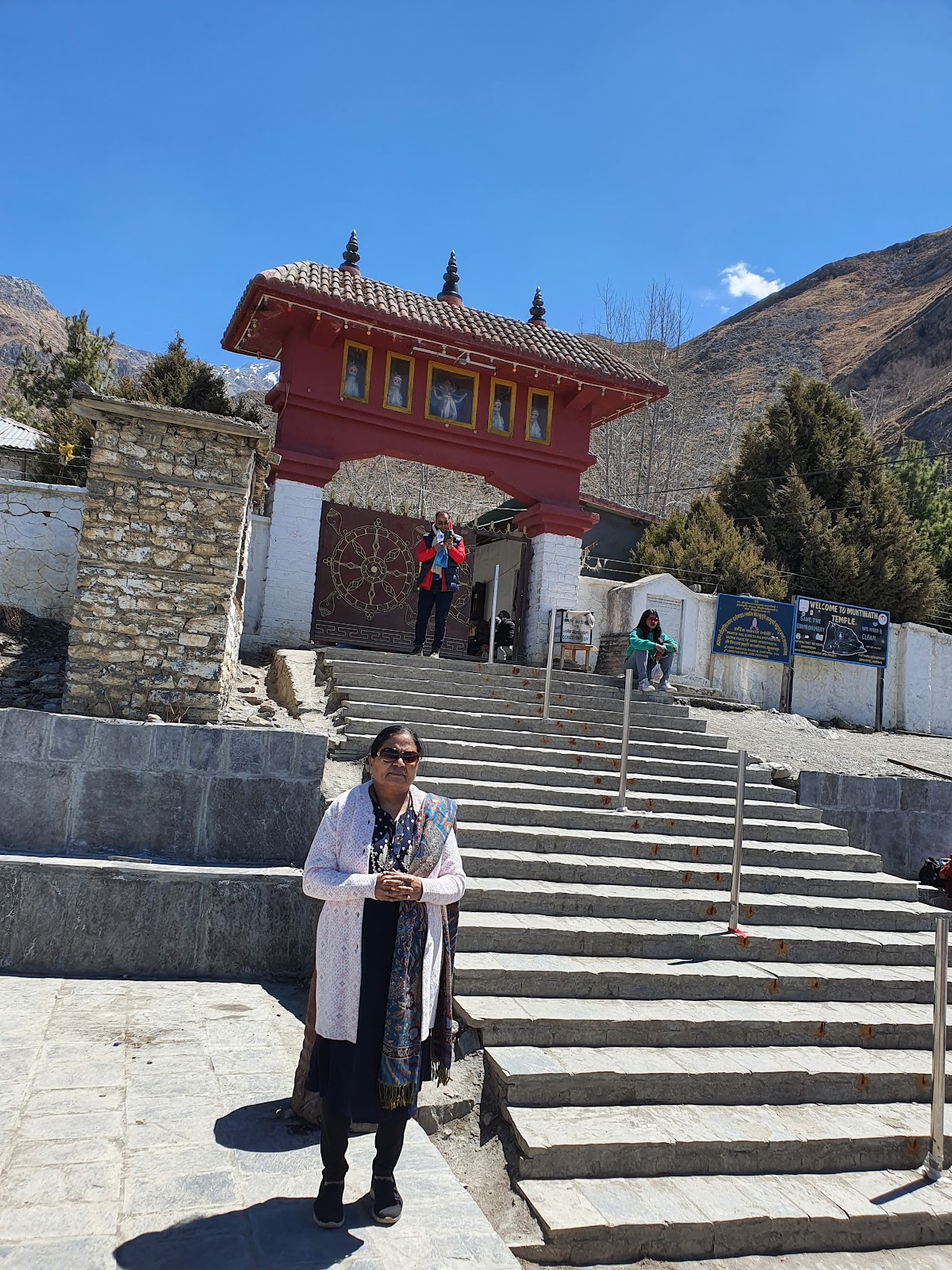
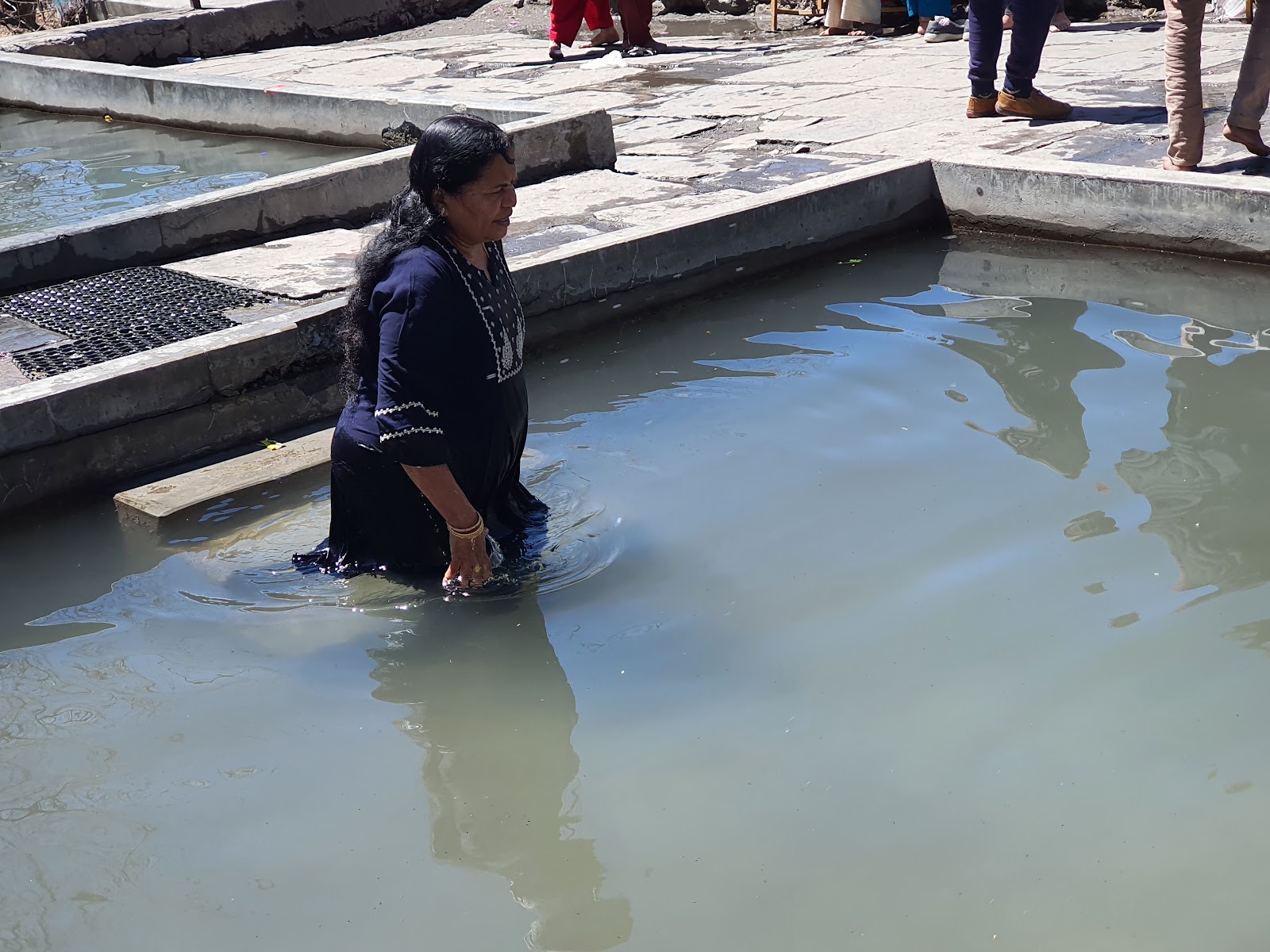
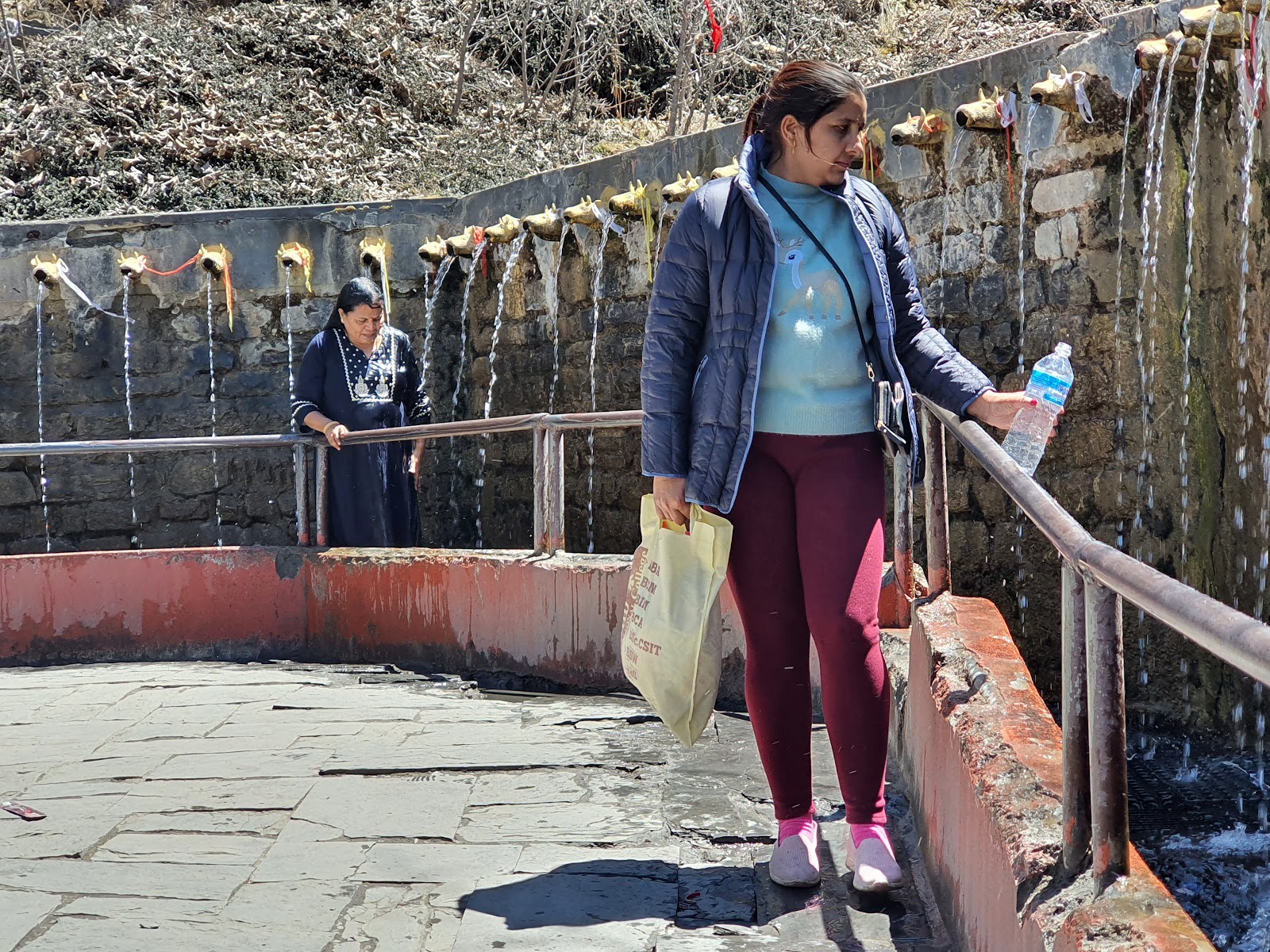
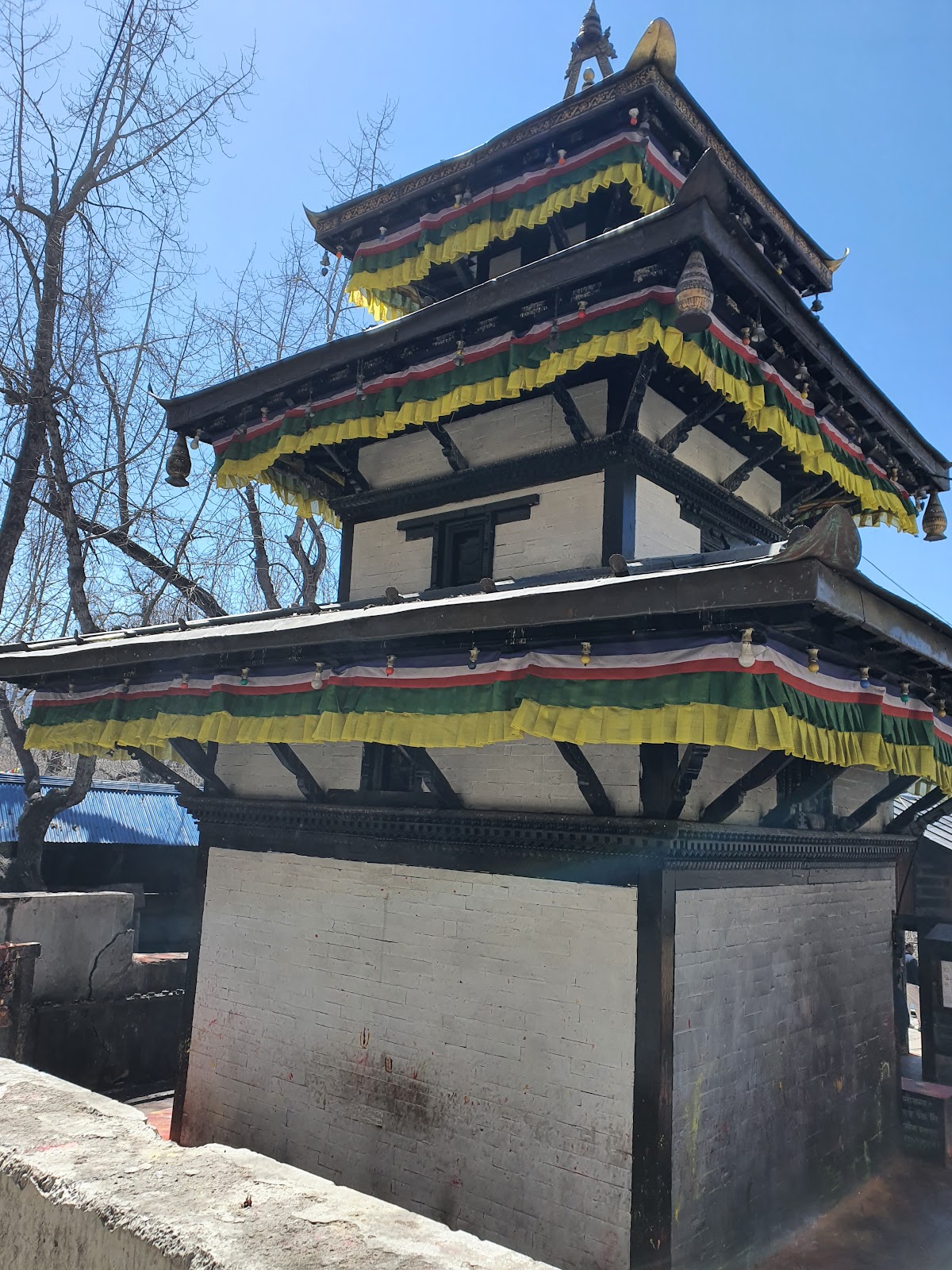
After successfully completing our trip to Muktinath Temple, we returned to our room, rested, and set off for Pokhara the next day. Again, suspense awaited us as to whether the tiny flights would fly; luck favored us, and we could get on the flight to Pokhara.
We reluctantly bid goodbye to the mighty Himalayas and in no time reached Pokhara domestic airport. Our larger luggage pieces had to be collected from Fish Tail Lodge, where we had stayed in Pokhara; luckily, our travel agent brought them in the car promptly, and we proceeded to the international airport of Pokhara, from where we would be taking a flight to Kathmandu.

Kathmandu airport, when we alighted, was crazily packed with tourists, and we waited desperately for our travel agent, as our previous experience with them was not very encouraging.
We had waited for a long hour when the agent nonchalantly walked towards us and took us to the travel car. It was astonishing that this time we had a brand-new car in excellent condition with the AC working very well. We breathed a cool sigh of relief and were told that we would be going directly to the Bhudanilakantha temple, and our luggage would be safely in the car till we went back to our hotel that evening.

We walked to the temple; surprisingly, the entrance was unremarkable, with people going about their daily routine, and we saw a courtyard filled with Rudraksh trees and many small temples built in the Nepali style of architecture.


Budhanilkantha Temple is also known as Narayanthan or Jal Narayanan temple; though the temple is so named, it is not a Buddha temple; instead, it has a Sanskrit origin meaning ‘Old Blue Throat,' a title of Lord Shiva given by the gods after he drank Halahal poison to save the world during Sagar Madhanam.
According to the epics, Shiva then flew up to the north of Kathmandu and struck the mountainside there and, with his power, created a lake named Gosaikunda to quench his thirst; the effect of the powerful poison ended but left behind a blue patch on his throat. This lake, Gosaikunda, is believed to be associated with the temple of Budhanilkantha and Lord Vishnu.
On walking further inside, we were surprised to see an open-air temple with the largest stone statue of Lord Vishnu in Nepal.
The statue symbolizes Lord Vishnu, who is regarded as one of the 'Trimurtis,' along with Brahma and Shiva. It is also said that a statue of Lord Shiva lies in the bottom part of the lake, just below Lord Vishnu’s statue.
The statue was cordoned off on all sides by an iron railing. We followed the queue, went through a small gate and found the 16.4-foot-long image floating in the water pond, 43 feet wide and called Cosmic Sea.

Lord Vishnu was reclining on the divine serpent Shesha's coils. He had in his four hands the Sudarshana Chakra, a Conch Shell, a club, and a gem.

I was spellbound by the remarkably intricate artwork that went into sculpting this magnificent 5th-century stone image of the sleeping Vishnu, which is worth seeing. It is supposed to be carved out of a single rock dating back to the Lichhavi period and is a black stone frame built from a single black basalt base; the Lord has a crown decorated with several pictures of Kirtimukha .

Two priests were standing at the foot of the image to receive offerings from devotees. The statue was covered by a large cloth canopy.

The statue is believed to be floating on water, though this has not been proven scientifically, as studies cannot be undertaken due to religious reasons. However, a chip of the statue that had come off was found to be very rich in silica.
The temple was rediscovered later during the early Malla Dynasty period by a farmer and his wife while they were tilling their field.
This temple is equally well venerated by Buddhists who consider the murti to be Buddha himself.
A big fair is also held at the temple area every year on auspicious occasions such as Ekadashis, Harishayani and Haribodhini of the Hindu lunar calendar, which marks the 4-month sleeping period of Lord Vishnu.

Surprisingly, royal family members, including the Nepalese monarchs, have not visited the temple till now, as King Pratap Malla in the 16th century had a prophetic dream that any king visiting the temple was doomed.
We also visited the other temples in the complex. I found myself humming along to a catchy tune, which I thought was a beautiful song on Vishnu; however, I realised to my chagrin that a blood donation camp was being conducted in the temple campus, and the tune was about the nobility of donating blood, L.O.L !
Suddenly, I found my husband missing. I searched hectically and sat under a tree observing the devotees. He came after 15 minutes apparently, our driver was instructed by the travel agency to shift our luggage to another car and leave for AC servicing- the lamest excuse ever, which left us angry and frustrated indeed.

The new driver was pleasant enough and said he practised Buddhism, he guided us to a restaurant where we had lunch and went to Kathmandu Durbar Square.
Durbar Square (durbar meaning “palace”) is an important site for Buddhist and Hindu rituals, holy ceremonies, and royal events and coronations; it is a UNESCO World Heritage Site and is one of three squares within Kathmandu Valley in Nepal. Very impressive was the pattern of a central golden window frame with two silver ones

Our driver left us at a traffic junction there and said he would be back after an hour to pick us as the square was a no-car-parking zone. We bought an entrance ticket and went to see the square; there were plenty of tourists going around.

Some of the parts of the square were accessible to tourists; there was a whitewashed European colonial-style building known as Gaddi Baihak. It looked very much out of place in design and architecture compared to the surrounding temples and places. Gaddi Baihak was badly damaged during the April 25th earthquake and was restored, and now serves as a museum


Surrounded by fountains, ancient statues, small ponds, and a series of courtyards such as Mohan Chok and Sundari Chok, the Square is a meditative, religious site for spiritual seekers.

When looked at keenly, the architecture of the buildings showed a lot of snake figures.

Within the inner complex of Durbar Square is the site of the Old Royal Palaces, also referred to as the Hanuman Dhoka Palace Complex.

The Royal Palaces used to house the kings of the Shah and Malla Dynasties, who ruled over the city until the 19th century. The palaces have since been turned into museums. It was indeed sad to see the palaces, partly ruined and shells of their original glory.


Built in the Newari architectural style, we could see the Jagannath Temple, Kotilingeshwara Mahadev (a stone temple of Lord Shiva), the Mahendreswara Temple, and the magnificent Taleju Temple, which was adopted from Tulja Bhavani of India

Other popular temples in the square include Mahadev Temple, Shiva Parvati Temple, Maru Ganesh, Bhagwati Temple, Saraswati Temple, octagonal Krishna Temple, and Jagannath Temple.
The Kal Bhairav (which represents the destructive form of Lord Shiva) we found most frequented

The square has the credit of carrying out the royal coronations of King Birendra in 1975 and King Gyanendra in 2001.
We found that most of the buildings that have been damaged during the earthquake in 2015 are still being restored.
The whole picture was a desolate one, but our guide, whom we hired for an hour, told us that Durbar Square comes alive during the festivals, especially during Dasara.
We settled down at a place, trying to give some well-deserved rest to our poor feet when I realized to my utter delight, that we happened to be sitting just across the Kumari house and it was nearly time for her to give darshan.

Perhaps the most popular site for both Hindus and Buddhists is the three-storied temple called Kumari Bahal. This Newari temple, built by the last Malla king Jayaprakash Malla, houses the living Goddess Kumari Devi, who is revered and worshipped by the country’s Hindus. While there are several Kumaris throughout Nepal, the best-known is the Royal Kumari of Kathmandu, who lives in the Kumari Ghar in the southern end of Durbar Square.
A girl is selected to become the earthly embodiment of the Hindu goddess Durga by an ancient and magical selection process. A small girl of about three years from the Nepali Newari community is selected as Kumari through a very rigorous process. After 11 or 12 years, a new Kumari is selected, and each gets a lifelong pension from the Nepal government.

There are a lot of criteria to be met by the girl; she should be healthy, there should be no scars or cuts on the body, etc. Once she becomes the Royal Kumari, she leaves her home and parents and must stay in the Kumari Ghar.
Her feet are not allowed to touch the earth. She goes out only for the festival Indra Jatra and a few other important festivals, taken in a gilded chariot on the lap of selected persons. Everyone, including the king, comes for her darshan and takes her blessing; they carefully watch her for specific signs that may allude to their fortune and fate.
Interestingly, even if she becomes ill, has a cut, and sheds even a drop of blood, she ceases to be Royal Kumari, as the Goddess in Kumari is believed to leave her body the moment she sheds even a drop of blood, and she becomes an ordinary girl.
The house she lives in was beautiful, with Nepali craftsmanship, and we could see some people moving around on the upper floors; we were allowed to take photographs of the courtyard of the house where we gathered.

We saw boards with strict instructions not to take snaps of her when she appeared. Finally, at the stroke of 3 pm, there she was at the heavily decorated window on the 2nd floor and looked around at us; we were looking up at her, some literally with their jaws dropping. In a minute she bounced off, and the window was closed.

The crowd dispersed; there was palpable excitement in the air. I personally felt she looked like a parrot in a cage, albeit a holy one, and wondered how she emotionally coped when she was replaced by another Kumari. Apparently, they are educated well and later on in life are happy; one Kumari, Ms Bajracharya, won the title of Miss National in 2022 and is keen to become an air hostess.
We then went to Swayambhu, an ancient religious complex atop a hill in the Kathmandu Valley. The Tibetan name for it means 'Sublime Trees' because of the wide variety of trees found on the hill.


The complex consisted of a stupa; a variety of shrines and temples, some dating back to the Licchavi period; and a Tibetan monastery, museum, and library.


It has two access points: a long staircase leading directly to the main platform of the temple and a car road around the hill from the south leading to the south-west entrance. As the day we went was a public holiday, there were huge crowds.


According to Swayambhu Purana, the entire valley was once filled with an enormous lake, in which grew a lotus. The valley came to be known as Swayambhu, meaning "self-created," and an eternal, self-existent flame existed over which a stupa was later built.

As we climbed the steps, we saw many monkeys in the north-west parts of the temple. They are holy because Manjushri, bodhisattva of wisdom and learning, was residing on the hill which the stupa stands on. He was supposed to leave his hair short, but he grew it long and head lice grew. It is said that head lice transformed into these monkeys.
Finally tired after trudging the whole long day, we wanted to retire to our beautiful Hyatt’s Regency hotel, where we had stayed on the 1st day in Kathmandu. We were blithely told by our driver that because that hotel was overbooked, we were going to stay in another hotel; by then we were totally battered by the callous attitude of the tour operator and decided to give in without a fight.
We were driven to the new hotel, which was quite ok; anyway, we would be there only for a night as we were flying home the next morning. Finally, the finishing touch to our Nepal journey was the late arrival of our driver the next day, causing us to rush at breakneck speed for Kathmandu airport, and luckily we reached there just before the counter closed.

Our trip to Nepal was a memorable one except for the careless and callous attitude of our local travel agency; we missed seeing many beautiful places due to our short trip. The people of Nepal were very warm and friendly, weather was good, and we could get all varieties of food available, suiting our preference. Indeed, we sometimes even forgot that we were in Nepal and not in India. If there is a chance to come back again, I would love to do so happily