After touring Meghalaya, we started for Assam with our spirits fully rejuvenated, but our knees strained and protested vehemently.
We first visited Basistha Ashram, as it was close to the Meghalaya-Assam border. It is believed to be the hermitage of sage Vashisht, one of the Saptarishi, and it was on the outskirts of Garbhanga Reserve Forest.

Vasishtha is one of the oldest and most revered Vedic rishis or sages. His ideas have been influential, and he was called the first sage of the Vedanta school of Hindu philosophy by Adi Shankaracharya. He has written Yoga Vasishtha, Vasishtha Samhitha,few versions of Agnipurana and Vishnu Purana.

He is famous for his legendary conflicts with Sage Vishwamitra, who was the family priest of the Raghu dynasty and teacher of Rama and his brothers.
As we entered, I noticed the usual hustle and bustle in the locality, with pilgrims going around and beggars all sitting in a row, and the usual tea and toy stalls.
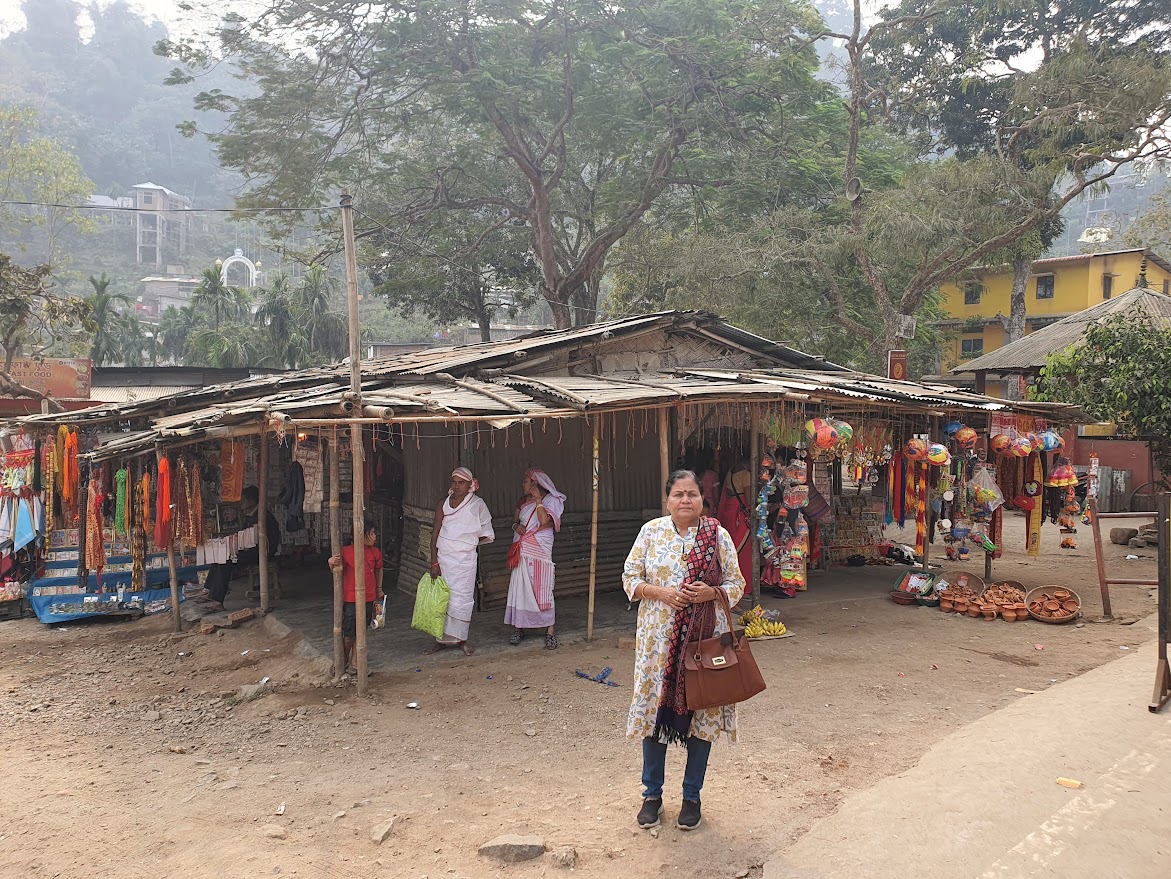
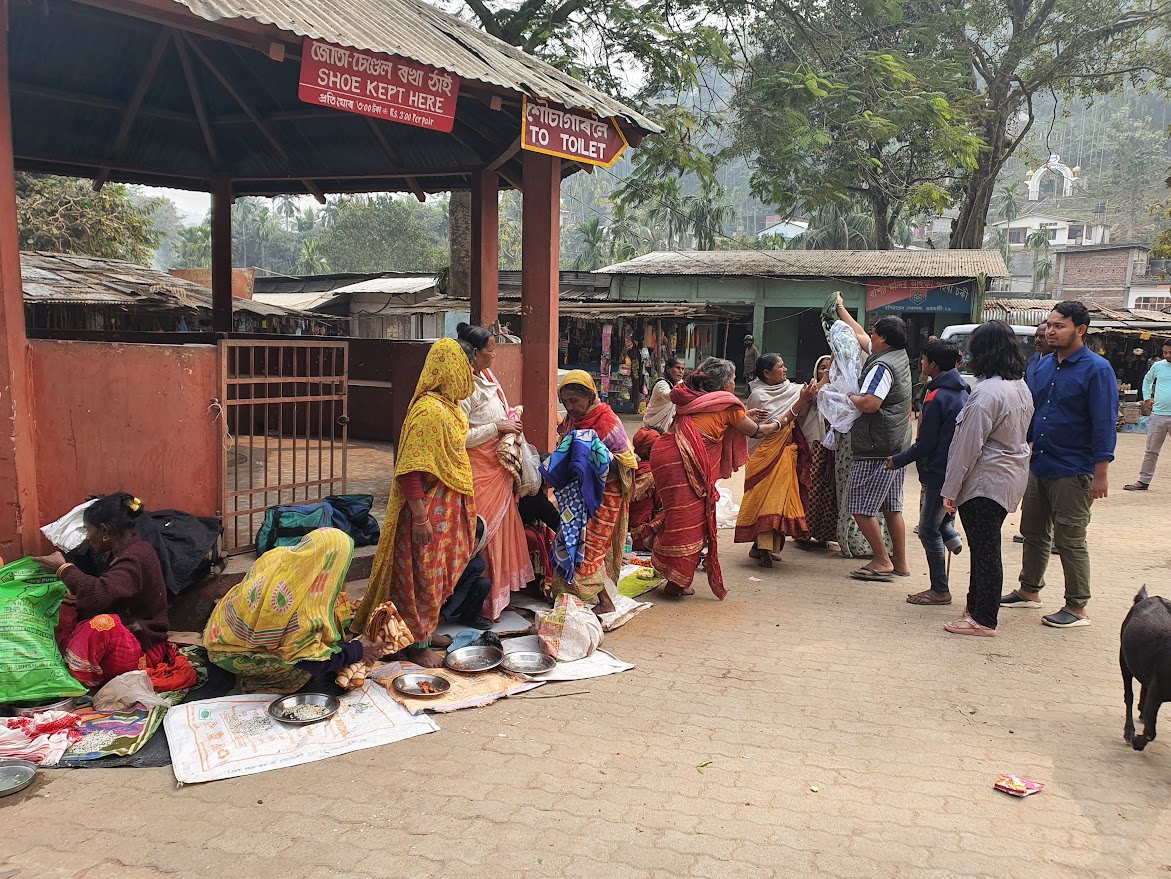
We were on our way to the temple when I noticed a car coming; the people in it wanted to distribute blankets to the poor. Suddenly, there was a flurry of activity, and I could see the beggars rushing and taking and hiding the blankets in their bags and asking for more; it saddens me to see greed in the people, be it any category.
The temple was in a hilly area, very near the forest and as a result, there were plenty of playful monkeys, which showed similar greed by snatching parcels from the hands of pilgrims.

The temple was reachable by ascending a few steps and had three rivulets named Lalitha, Sandhya, and Kantha, forming a waterfall with the water originating from Meghalaya gushing down to enter the Brahmaputra River.
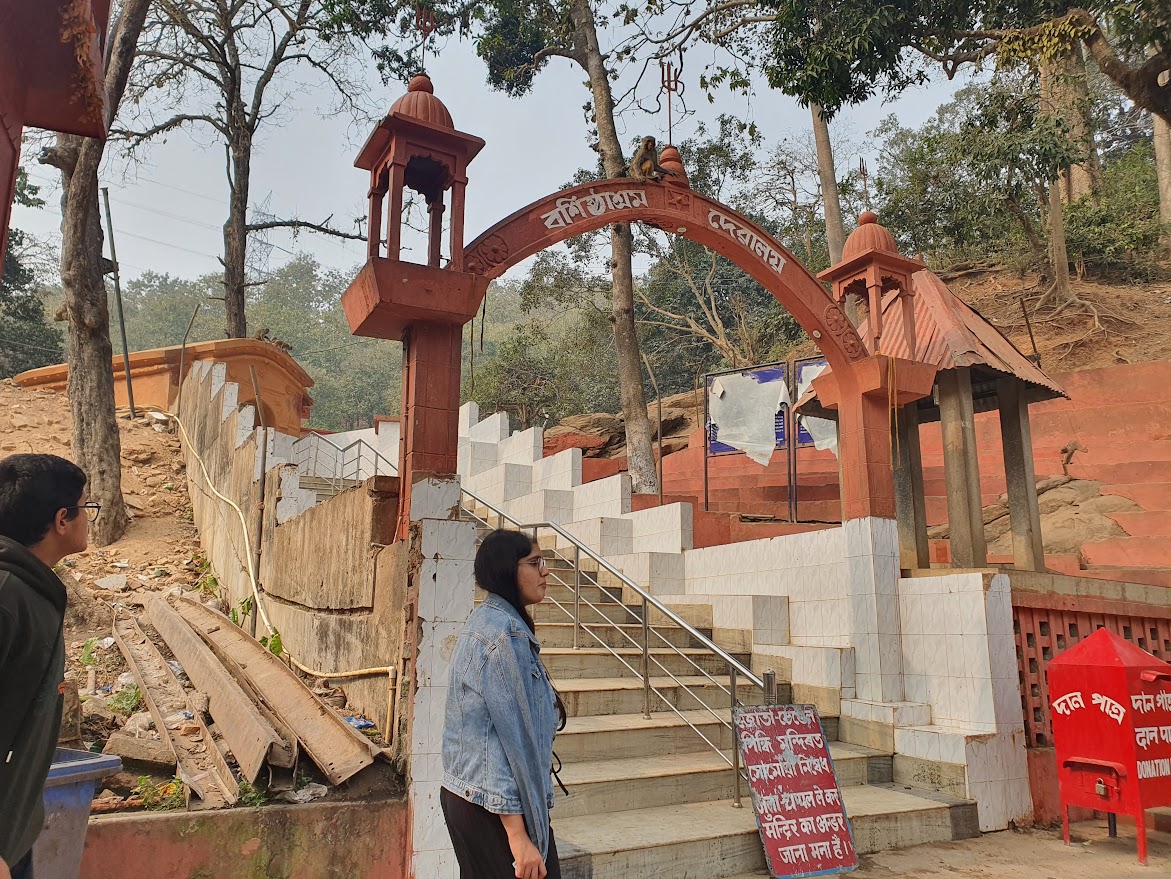


The temple was built by the Ahom king, Raja Rajeswar, in the second half of the 18th century.

Apparently, many years ago, a stone hill collapsed, revealing four Ganesh idols and a Durga idol carved into a giant rock.
We saw Janardan Devalaya, dedicated to Lord Vishnu and a Ganesh mandir.

There was a big statue of a huge mouse standing royally alone.

In the courtyard, there was an imaginary statue of Sage Basistha, and there were idols of various other gods.

A cave said to be used by Ma Arundhati, wife of Saptarishi Vashistha, for sadhana exists a little distance away.


The place was serene and beautiful but needed more maintenance. I noticed some local people washing their clothes in the water, where I could see multiple lingas being worshipped and felt helpless.

We then passed by the streets of Guwahati; it was a typical busy day with a lot of shopping going on. I found the autos very colorful and attractive.


Structurally, the temple dates back to the 8th-9th century, with many subsequent rebuildings, and the final hybrid architecture with a hemispherical dome on a cruciform base defines a local style called Nilachal. It is also one of the oldest 4 of the 51 Shakti Pithas.

Historically, the worship progressed in three phases—yoni under the Mlechhas, yogini under the Palas and the Mahavidya under the Kochs.
The Kalika Purana, an ancient
work in Sanskrit, describes Kamakhya as the yielder of all
desires, the young bride of Shiva, and the giver of salvation, and this
denotes the spot where Sati used to retire in secret for a carnal
union with Lord Shiva, and it was also the place where her yoni (genitals
and womb) fell after Shiva's tandav nrutya with the corpse of Sati.
The main temple is situated in a complex of individual temples dedicated to the ten Mahavidyas of Saktism, namely, Kali, Tara, Tripura Sundari, Bhuvaneswari, Bhairavi, Chinnamasta, Dhumavati, Bagalamukhi, Matangi, and Kamalatmika.

We took a ticket for special darshan, as there was a heavy rush and a panda accompanied us; the garbhagriha was small and dark and reached by narrow, steep stone steps. Inside the sanctum it was quite dark, and from somewhere a sudden gush of very cold air brushed our faces; there was a sheet of stone that sloped downwards from both sides, meeting in a yoni-like depression about 10 inches deep.

This hollow is constantly filled with water from a perennial underground spring. It is this vulva-shaped depression that is worshipped as the goddess Kamakhya herself and considered the most important pitha (abode) of the Devi. Before we could even experience or see it fully, we were led out by our panda.

Historians suggest that the Kamakhya temple was likely an ancient sacrificial site for Khasi and Garo people and that the name originated from the Khasi goddess, Ka Meikha , meaning old cousin -mother.
Garos people offered worship at the
earlier Kamakhya site by sacrificing pigs. The tradition of sacrifices
continues today, with devotees coming every morning with animals and birds to offer
to the goddess.
Due to a legendary curse by the
Goddess, members of the Koch Bihar royal family do not visit the
temple and avert their gaze when passing by as they are not supposed to even
glance at the temple
As a centre for Tantra worship, this
temple attracts thousands of Tantra devotees in the annual festival known as
the Ambubachi Mela. In June, from the 7th to the 10th day, the Kamakhya Temple doors are
closed for worship as the goddess is believed to be menstruating.
This festival is
seen as a celebration of menstruation, which is often a taboo topic in many
cultures, and is a unique expression of female power and fertility; the temple is
closed for three days during the festival.
During the festival, the river near the temple is said to turn red, symbolising the goddess's menstruation. Prasad during the festival includes "Angodak" (fluid from the body) and "Angabastra" (red cloth used to cover the stone yoni during menstrual days), which are distributed to worshippers.

Durga Puja is also celebrated annually at Kamakhya during Navaratri.
Our next visit was to Deepor Beel, a freshwater lake located to the southwest of Guwahati city. It was a very peaceful place with a large expanse of water; Rani and Garbhanga hills guarded the lake on one side, and we could see a bridge and fields around.

Over 120 species of birds have been listed in the sanctuary, including kingfishers, fishing eagles, adjutant storks, and abundant varieties of ducks. A watchtower has been erected on the bank of the beel for bird watching and also security purposes.

Occasionally people see herds of elephants visiting this lake to quench their thirst and also enjoy a thorough bath in the water.
Surveys have revealed 20 amphibians,
12 lizards, 18 snakes, and 6 turtle and tortoise species in the beel. Over 50
commercially viable species of fish, belonging to 19 families, have been
identified.
Deepor Beel is declared a wetland under the Ramsar Convention due to its biological and environmental importance.

We visited the lake in the evening, so there was a cool breeze wafting in. There was provision for boating, but there were no traces of the boatman.

Shooting and bird-trapping are prohibited by law, but enforcement is said to be inadequate.
The Dipor Bil provides, directly or
indirectly, natural resources for the livelihood of fourteen indigenous villages.
The Basistha and Kalmani rivers and
local monsoon run-off are the main sources of water to the lake between May
and September. The Khonajan channel drains the beel into the Brahmaputra River.
The lake acts as a natural stormwater reservoir for Guwahati city during the monsoon season
During the winter months, when the
size of the lake reduces in area by about fifty per cent, the shore area is
cultivated with rice paddy as the climate is also relatively cool and dry.
We then went to the temple of Lord Venkateswara; the temple looked serene and beautiful and had pure white architectural structures and images of deities carved out in the walls. The wooden doors of the temple were handcrafted in Chennai and were intricately carved.

There was a park located outside the temple for tourists to enjoy the scenic
beauty. Goddess Durga temple is built to the right side of the main temple.
The temple premises had a Yagasala
built for performing yagnas and an auditorium decorated with beautiful
interiors and exquisitely designed statues to hold cultural functions of
classical and folk music gatherings regularly during Sundays. The temple looks divine at night as it is well lit with lights.
That night we went for a cruise on the mighty river Brahmaputra. As the sunset cruise tickets were sold out, we chose the Alfresco Grand Luxury Dinner cruise. We could get seats on the deck area; the seats were comfortable, and food was good, served hot and quickly too.
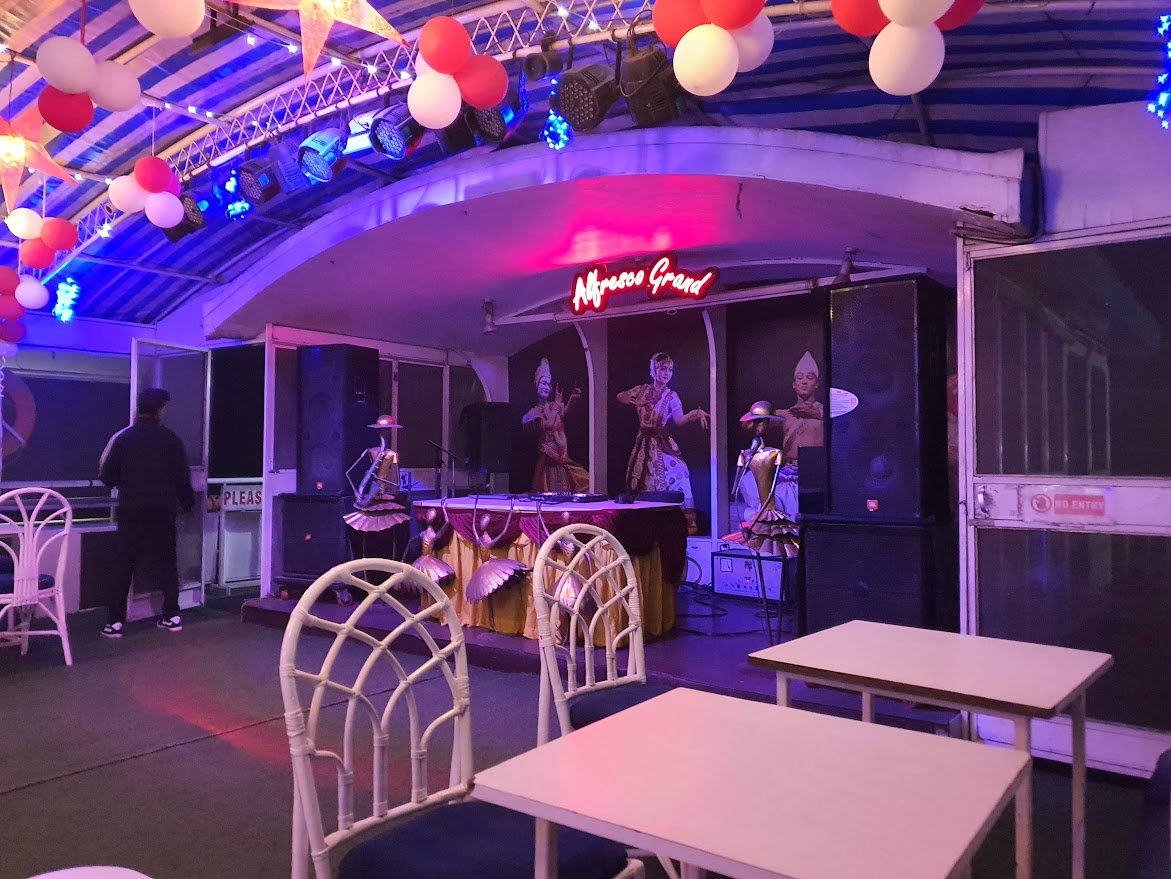
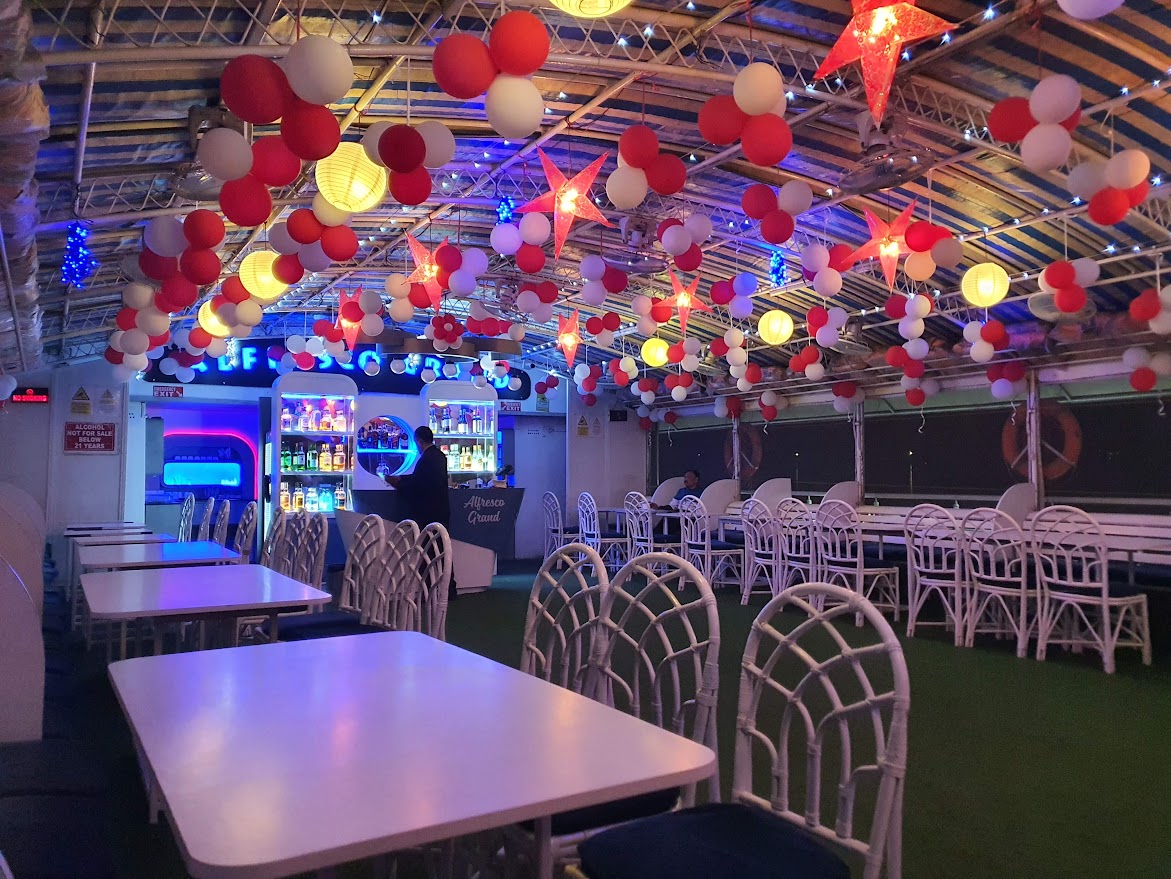
We enjoyed going around the river with the cool breeze caressing us and listening to the pleasant live music; the singer was in fact, good and belted out old Hindi songs.

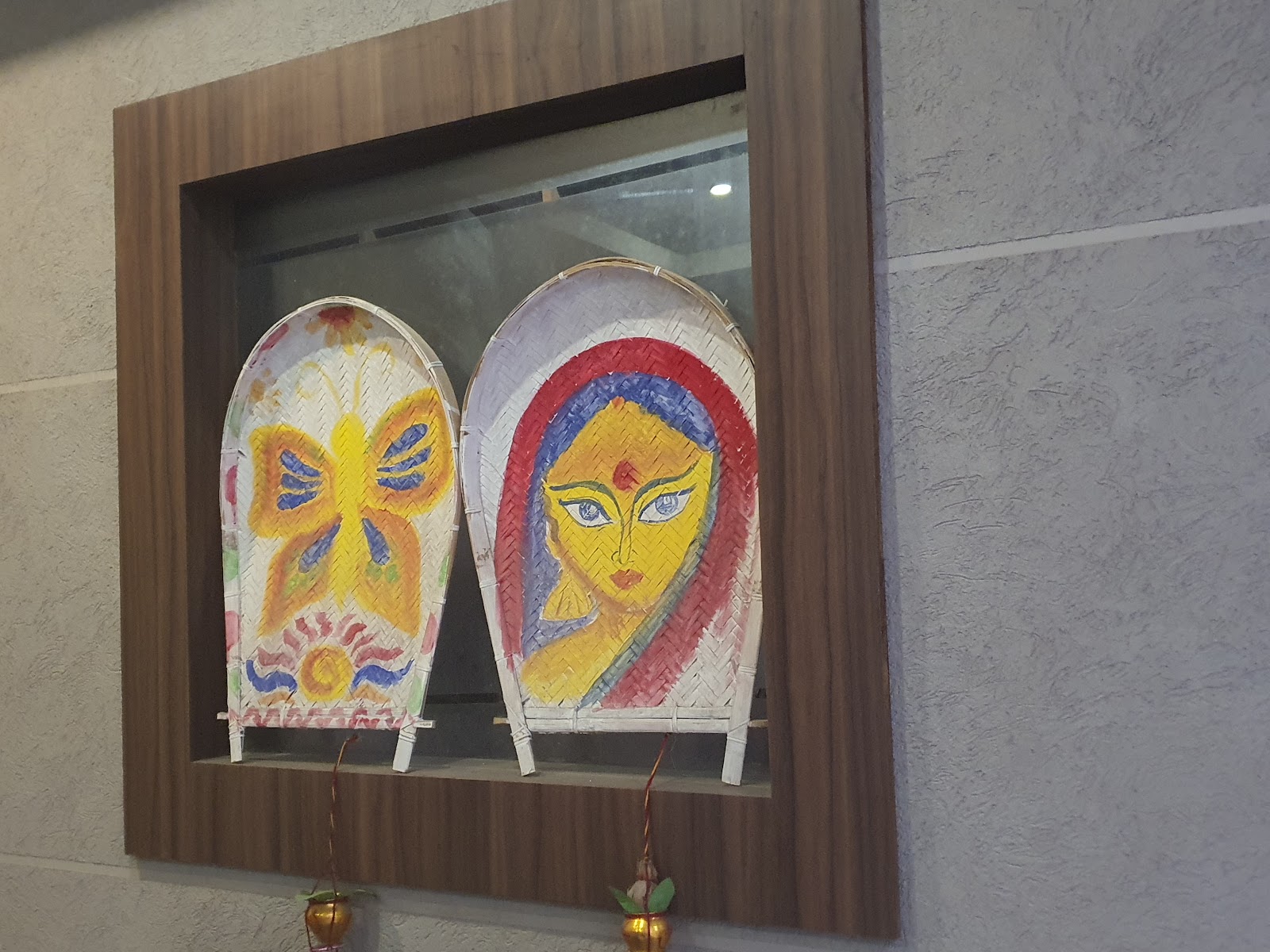
The next day after the customary complimentary breakfast in our hotel, we left for Hyderabad. In the hotel foyer, I found these typical domestic items we call "cheta," nicely decorated; I admired the creativity of the Assamese people.


No comments:
Post a Comment